

Why your Steam page is not converting
A realistic explanation of how players read your page and why most games fail this silent test
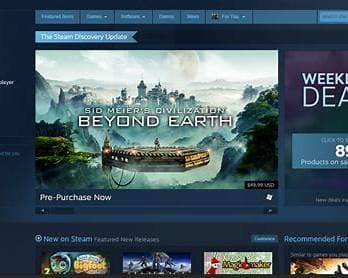
A Steam page does not fail because the game is weak. It fails because the page does not communicate the game in the way players naturally interpret information on Steam. Studios often imagine that players approach a store page with patience and curiosity. In reality players behave very differently. Most arrive with a short attention span, a pattern based decision process and a strong desire to understand the game as quickly as possible with minimal effort. If the page does not satisfy this pattern, players leave even if the game itself has genuine potential.
Most studios underestimate how fast these decisions happen and how little text or explanation actually matters. Conversion does not depend on how complete the information is. It depends on how the page shapes the reader's first emotional and structural understanding of the game. The majority of Steam pages fail at this very first layer and everything that follows is already too late. This is one of the key reasons studios make poor marketing decisions.
Your page does not create understanding within the first seconds
The first task of the page is not to convince or persuade. It is to help the visitor understand what the game is. Without immediate comprehension there is no emotional anchor for the rest of the content. The visitor might scroll, but they are already disconnected from the experience. A page that looks attractive but does not explain itself in a single glance becomes noise in the discovery feed.
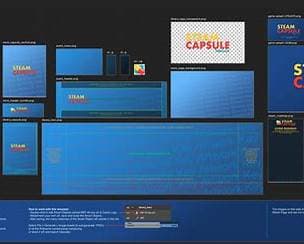
Players do not read descriptions when they feel uncertain. They need clarity before they invest attention. Many pages fail because the capsule art communicates tone but not activity. The visitor sees a mood, a character or a setting yet still cannot imagine what they will actually do in the game. Without this structural understanding the player hesitates and the hesitation becomes exit. Steamworks capsule guidelines explain the technical requirements but do not address this deeper communication challenge.
The page must express the core action or identity of the game faster than the visitor can generate doubt. If the player has to work to understand the game, the conversion rate collapses long before they reach the screenshots or the trailer.
Your trailer shows beauty before it shows structure

Most trailers fail for a simple reason. They spend too much time building atmosphere and not enough time revealing how the game functions. Viewers watch the first moments of a trailer with the same question every time. They want to know what kind of game they are looking at. If the trailer delays this answer because the studio wants to highlight tone or animation first, the viewer quietly disengages.
Atmosphere is valuable. Emotion is valuable. But structure is the anchor that lets the rest of the message land. Without a clear understanding of the player role, the camera language, the rhythm of actions or the nature of the challenges, the entire trailer becomes a decorative object. It may look impressive, but it does not support the decision making process that leads to a wishlist.
A strong trailer reveals the identity of the game within the first seconds and then builds interest around it. Many studios reverse this sequence. They ask the viewer to feel something before they understand anything, which is the exact opposite of how players make choices on Steam. This is why knowing when to start marketing includes testing trailer concepts early.
Your screenshots display scenes instead of information
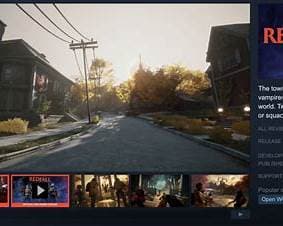
Screenshots are not illustrations. They are information units. They function as a silent tutorial for someone who has never touched the game. A good gallery answers questions that the visitor has not yet formulated. What is the perspective. What is the pace. What is the mechanical focus. What does the player control. What creates tension or satisfaction.
Many screenshots fail because they do not answer any of these questions. They show environments with no interaction. They show characters without context. They show impressive art that reveals nothing about the actual experience. The visitor clicks through the gallery and still does not know how the game plays. Once this happens, the page loses its credibility as a source of insight.
A screenshot should not simply display beauty. It should help the viewer mentally simulate how the game feels. If the gallery cannot create this simulation, it will not convert. Steam's screenshot guidelines recommend showing gameplay but do not emphasize how critical information density is.
Newsletter
A premium newsletter for game studios and publishers
Deep strategy breakdowns, positioning frameworks, and practical systems for PC & console games.
$14.99/mo, cancel anytime.
Your description talks about features instead of helping players imagine the experience
The majority of Steam descriptions read like lists. They explain features, mechanics and backstory in a way that might be useful for internal communication but not for decision making. Players do not think in terms of attributes. They imagine experiences. They try to place themselves inside a rhythm, a challenge or a fantasy. If the description only provides text without shaping a mental picture, it becomes another block of noise that players skip.
A strong description makes the experience tangible. It helps the reader imagine themselves inside a meaningful moment. It clarifies the role they will take and the sensations they can expect. The description does not need to be long. It needs to be readable and precise. When written correctly, it strengthens what the player already sensed from the trailer and screenshots.
If the description forces the player to decode your intentions, the page loses the only opportunity to solidify interest.
Your page relies on player patience that does not exist
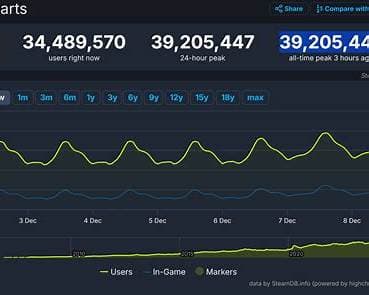
Steam is not a patient environment. It is a high volume discovery feed shaped by rapid judgments. Players rarely devote more than a few seconds to a page unless they understand the game clearly and immediately. Many studios believe that players want depth and detail. In truth players want clarity and confidence. Depth is welcome once they know what the game is about. Before that moment depth is noise. This is especially true for indie teams competing against larger studios.
Pages often fail because they assume that visitors will take the time to piece together the meaning of the game from multiple sources. They will not. They expect the page to do this work for them. A page that requires interpretation collapses under the weight of player friction.
The burden of clarity belongs entirely to the studio. The player will not meet you halfway.
Your page does not build momentum toward a decision
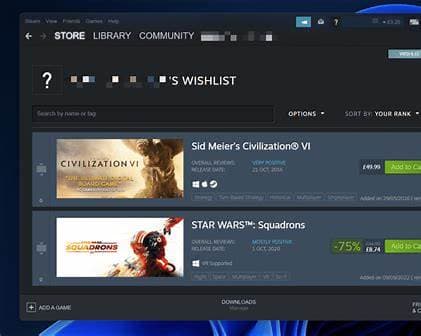
A Steam page must guide a visitor from curiosity to understanding and from understanding to commitment. Each element has a role. The capsule initiates interest. The trailer clarifies the structure. The screenshots shape the imagination. The description reinforces value. Social proof creates confidence. The wishlist button finalizes intent.
If any element fails, the sequence collapses. Many pages generate curiosity but never convert because they do not sustain momentum. The visitor pauses to make sense of what they are seeing. That pause interrupts the emotional rhythm that leads to a wishlist. The visitor leaves not because the game is bad but because the page did not support the natural flow of decision making. Steam's visibility documentation explains how the algorithm rewards pages that convert well.
A converting page feels effortless. Every element pushes gently toward the next. A non converting page presents friction points that break this momentum.
The real reason your Steam page is not converting
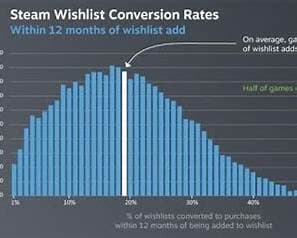
Your page is not converting because it does not create understanding quickly enough for the visitor to imagine the experience. Without understanding there is no emotion. Without emotion there is no momentum. Without momentum there is no conversion.
Most studios focus on adding more information or more polish. Neither of these fixes the underlying issue. A Steam page succeeds only when it allows a stranger to see the game clearly and to imagine themselves playing it. The faster this happens, the higher the conversion. The slower this happens, the closer the game moves toward invisibility.
The truth is simple. A Steam page is a communication test. It does not measure the quality of your game. It measures the clarity of your message. When the message passes this test, conversion rises even for modest projects. When the message fails, even strong games struggle to gain visibility. For teams building marketing without a budget, mastering this conversion is essential.
Your Steam page is not a brochure. It is the first level of your game. If players cannot complete that level, they will never reach the rest.

I’m a marketing consultant helping PC and console studios build systems that grow wishlists and sales with clarity, not chaos.
I work with teams that want predictable growth across the full lifecycle of a game: Steam optimization, store asset improvement, messaging, analytics, creator strategy, and launch planning. My approach combines structured decision making with practical execution so developers can focus on building the game while the marketing foundation scales with them.
- Steam visibility, conversion and wishlist growth
- Store assets: capsules, trailers, messaging, positioning
- Analytics frameworks and marketing decision systems
- Creator and influencer pipeline setup
- Launch strategy for PC and console games
- Long term marketing systems, not one off tactics